Why risk reviews should start in the doc, not the ticket
Most privacy, security, and AI risk programs still begin the same way: a product manager or engineer stops what they are doing, opens a tool they don't otherwise use, files a request for review, and answers a list of intake questions.
That step is where a lot of review programs quietly lose. It is friction for the business, and it happens late — usually well after the design decisions that actually carry risk have already been made.
TerraTrue built its Google Drive and Google Docs integration to remove that step, so a risk review starts from the document a team was already writing. There are two reasons behind it.
Why should product and engineering stop filling out intake forms?
Because the answers already exist in the spec, and AI can read them.
Risk teams — privacy, security, and AI risk — don't want to ask product and engineering to submit a request for review using new tools and provide answers to intake questions.
That was the only way to do it for a long time. Someone had to translate the work into a form the review team could triage, and the only person who could do that was the person doing the work. Today, with the power of AI, it should be possible to automatically understand context and automatically answer questions on behalf of product and engineering.
With Google Docs, that is exactly what TerraTrue does. The product requirement document already describes the feature. The intake answers are already in there, in prose. The work is extraction, not data entry.
What happens when you bring risk reviewers in earlier?
Two things: reviews stop slowing releases down, and the feedback becomes usable.
Customers want to bring risk reviewers in as early as possible in the development lifecycle, and both benefits follow from that.
Reviewers can work in tandem with developers. When risk reviewers come in early, they have better chances to work alongside developers as they are building new features and products. As a result, they don't slow down the pace of execution and release of those new functionalities. That is a win-win for both sides.
Feedback becomes more actionable. Early feedback lands while the design is still soft. Reviewers can help developers build the right foundations for privacy, security, and AI from the get-go, rather than flagging problems once the architecture is set and the change is expensive.
The alternative — reviewing at the end — produces the pattern most risk teams recognize: a review that arrives too late to change anything, and a business that learns to route around the review team.
Isn't a ticket a good enough trigger?
For many teams, yes. But it's not the earliest one available.
TerraTrue already integrates with ticketing systems, and reviews that start there still get done, in the tool the engineering org lives in.
But a ticket is downstream of the decision. By the time work is ticketed, the thinking has already happened somewhere else.
That somewhere else is usually a document. Design specs and product requirement documents are where a new feature, project, or initiative is written down first. So we wanted to be even more proactive, even more shift left, and connect directly into the systems developers use for design specs, PRDs, and anything that can realistically kick off a review.
Ticketing and documents aren't competing triggers. They're two points on the same timeline, and the earlier one is now available. This is one piece of a bigger approach — here's how we think about scaling the whole review process.
What does a document-triggered risk review look like?
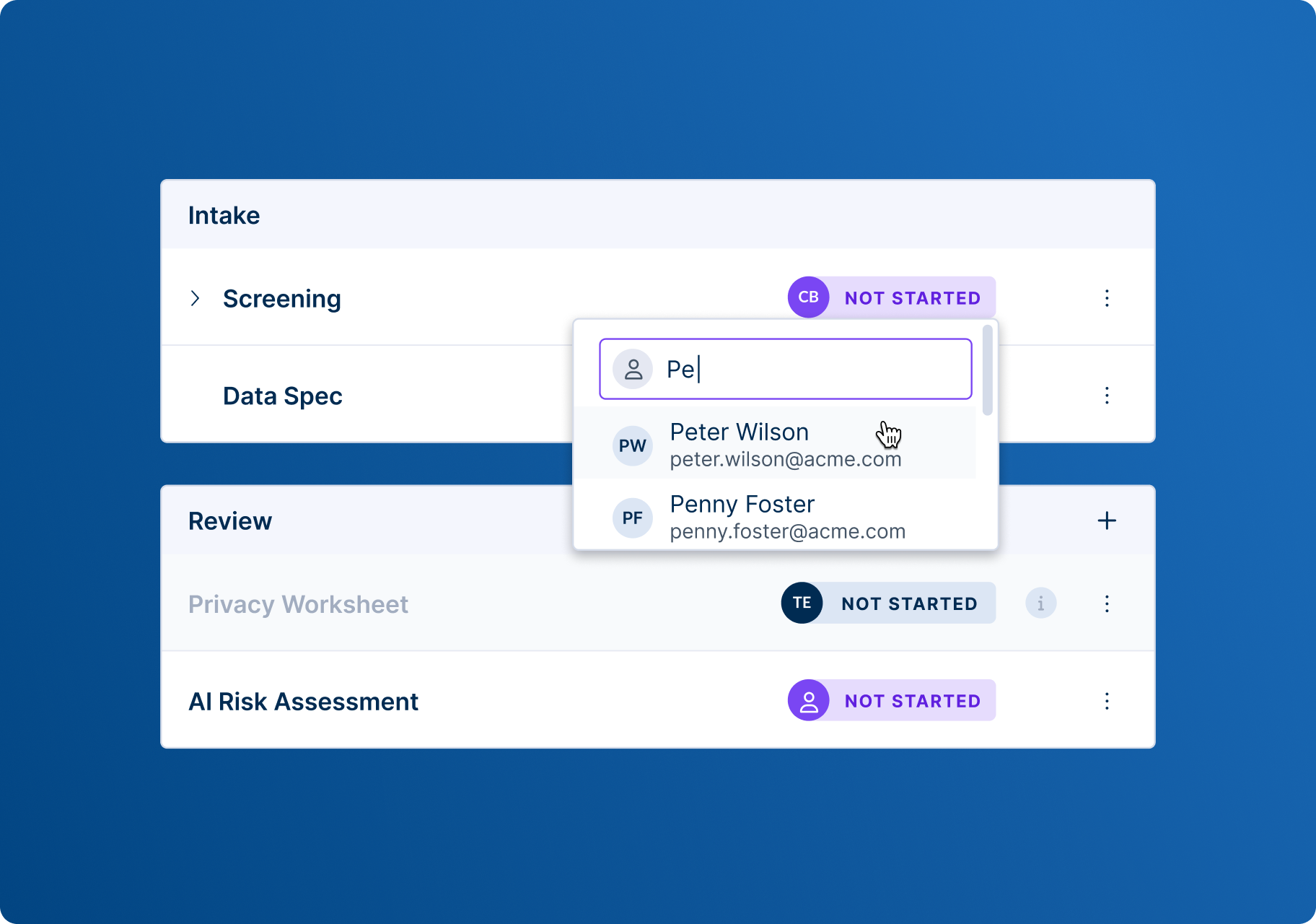
The Google Drive integration watches a shared Drive that you connect. When someone applies the TerraTrue label to a Google Doc and sets its status to Ready, TerraTrue creates a launch and starts the review.
From there:
- The launch inherits the document's title, and a link back to the Doc is added to the launch.
- A PDF snapshot of the Doc is attached for reference.
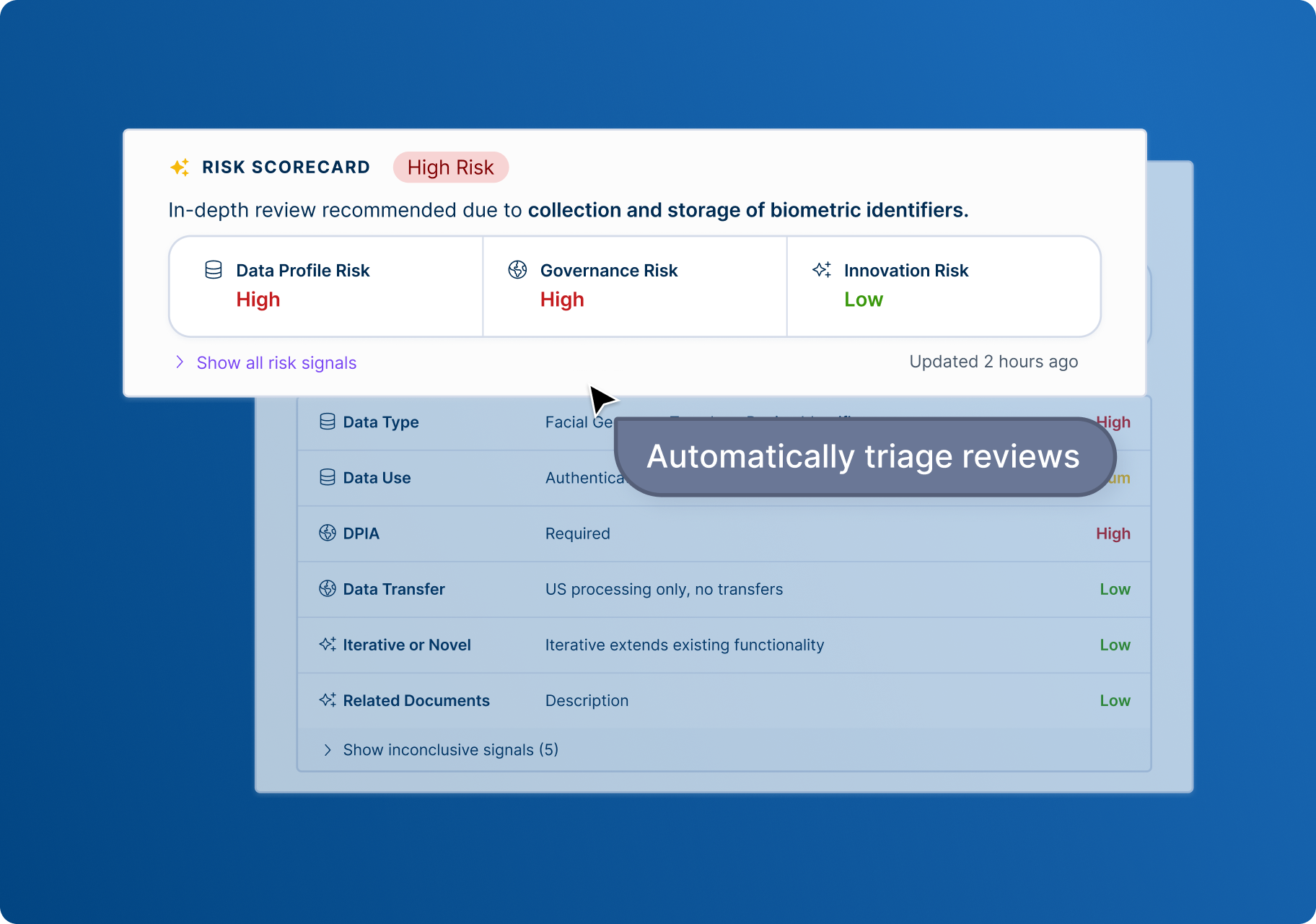
- TerraTrue AI summarizes the document and pre-fills the launch description, so reviewers start with context instead of a blank field.
- That same document content powers AI suggestions inside the intake workflow.
- The launch link is written back into the Doc's TerraTrue label, so anyone working in the document can jump straight to the review.
The person who triggered the review applied a label. That is the entire ask on the business.
See the full walkthrough, from product spec to triaged review →
Frequently asked questions
What does it mean to shift left a privacy and security review?
Shifting left means moving the review earlier in the development lifecycle — closer to design and specification, further from launch. In practice it means triggering reviews from the artifacts teams produce first, like PRDs and design specs, instead of waiting for a ticket or a release date.
Does starting reviews earlier slow down engineering?
The opposite, in most cases. When reviewers engage while a feature is still being designed, they can work in tandem with developers rather than blocking a finished build. Late reviews are the ones that create delays, because by then any change is expensive.
Do product teams still have to answer intake questions?
Not manually, when the document covers them. TerraTrue AI reads the connected Google Doc and suggests answers to intake workflow questions, which a reviewer can accept in a single step.
Can reviews still be triggered from a ticketing system?
Yes. Document-based triggering is an additional entry point, not a replacement. Teams can use whichever trigger fits the workflow, or both.
See it in action: How a Google Doc triggers a privacy review in TerraTrue →
Set it up: Google Drive integration guide →