How to build a proactive privacy program product teams adopt
Most privacy programs fail for a simple reason: They’re never fully adopted because they don’t account for the needs of the people actually building products. A program can be comprehensive, well-documented, and technically sound but it won’t matter if it’s circumvented by the engineers, marketers, and product managers it was meant to help. When that happens, privacy becomes a reactive box-checking exercise instead of a proactive consultation that results in better, safer products.
The privacy programs that last are the ones that are integrated into how the business already operates and that treat the people building products as partners.
Why most privacy programs fail to drive adoption
Too many privacy programs are designed in isolation without considering on-the-ground realities of how organizations operate. One-size-fits-all frameworks rarely survive contact with real organizations because lean privacy teams do not have the authority to impose material changes to the software development lifecycle. Instead, success is more commonly achieved by focusing on adapting your program to the peculiarities of how your organization operates. This often starts with developing a deep understanding of the distinct tools, goals, and vernacular used by different teams.
Meet product teams where they already work
The most dependable way to kick-start adoption is by integrating your program into the places where work already happens. Product and engineering teams collaborate in Jira and GitHub; PMs spend hours in Google Docs; everyone is addicted to Slack. Asking people to leave the tools they know to request a privacy review adds friction at the exact moment you need cooperation, and friction is where adoption dies.
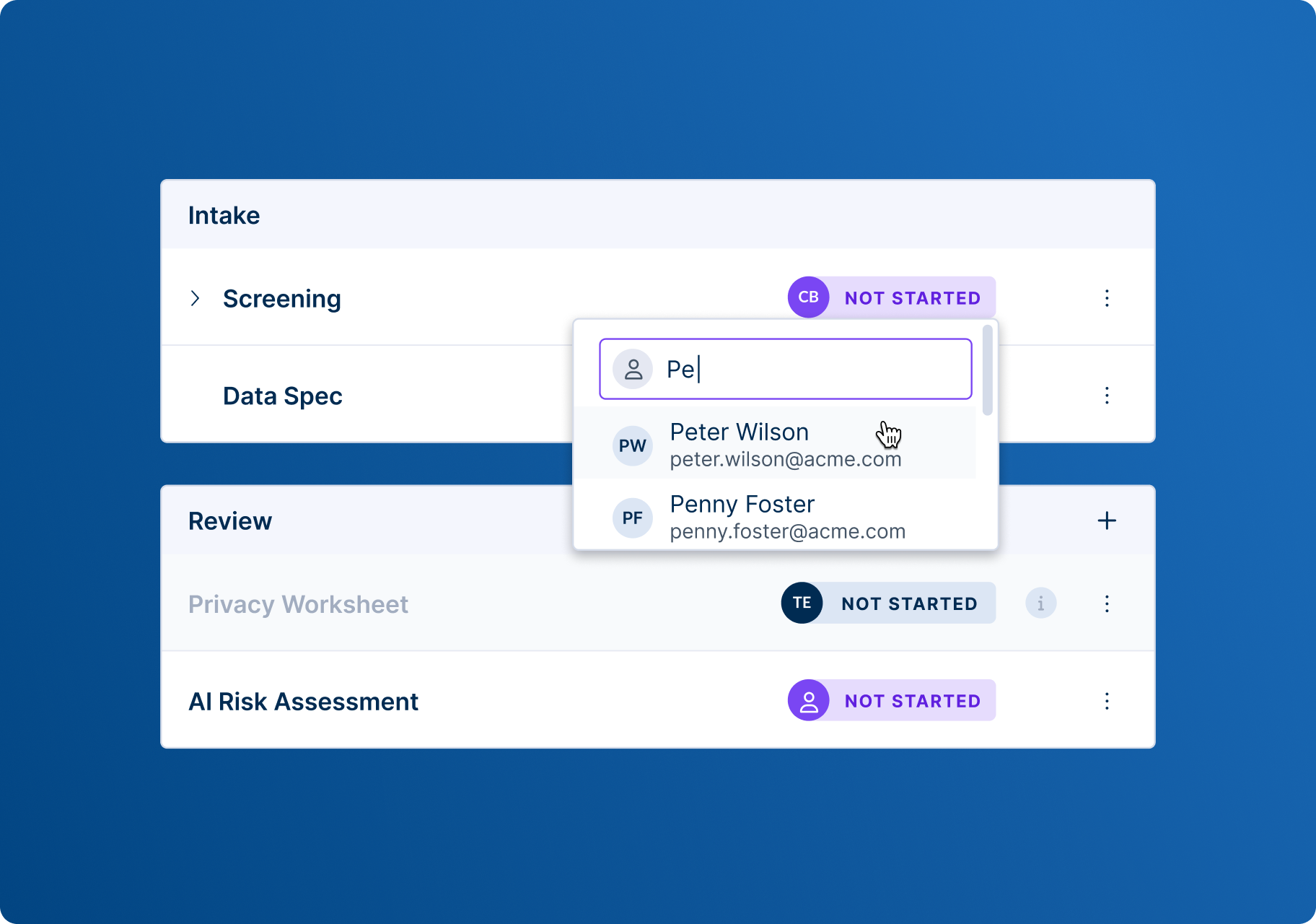
Embedding reviews into the systems people already touch can start small, with something as simple as leaving comments directly on the Jira issues that matter. As your business grows and your program matures, a dedicated platform that integrates those tools and consolidates reviews into one place helps achieve a scale that a person jumping between a dozen tabs cannot.
A practical progression:
- Manually embed in the tools teams already use (Jira, Slack, GitHub, Notion)
- Deliver feedback inside those tools instead of pulling people into yours
- As the surface area grows, adopt a platform that integrates across systems and centralizes review
Speak the language of PMs and engineers
George Bernard Shaw once quipped that all professions are conspiracies against the laity. Nowhere does this become more apparent than when privacy professionals dryly recite complex statutory text to developers and product managers. A verbatim reading of a regulation rarely helps engineers and designers create better products. The work of a privacy professional is translation: Learn how teams describe their products, features, and customers, then turn regulatory requirements into concrete, plain-language recommendations they can implement without a law degree. A shared vernacular pays a second dividend, too. Once you can speak with product teams with their own terms, you start to better understand their goals and challenges.
Understand business goals before offering guidance
The most reviled privacy programs are those that attempt to impose top-down requirements without first understanding business needs. Starting your review with questions about what teams want to achieve and how personal data will help them do it often leads to positive, value-additive solutions.
Take an advertising team that wants to gather personal data, build user profile segments, and retain those segments indefinitely. A common reflexive response is to impose an arbitrary data retention cap to minimize privacy risk. While this does help minimize risk, it feels arbitrary to the advertising team and potentially undermines valid business goals. A more useful approach starts with asking questions about the purpose behind the request:
- What outcome is the targeting meant to drive?
- Who are the advertisers, and what do they actually need?
- How long does the data genuinely need to persist to deliver that outcome?
- Do you need a year or more of data to track seasonal patterns or is a shorter timeframe appropriate?
Use these answers, applicable legal requirements, and your organization's appetite for risk to develop advice that is specific, defensible, and aligned with your organization’s priorities.
Equip stakeholders with knowledge to make good initial decisions
Small privacy teams will never achieve scale – and risk undermining adoption – if every decision routes back to them for a verdict. Your goal should be to equip the key decisionmakers with frameworks to identify key risks and mitigate them before a single line of code is written. Your goal is not to ensure PMs can recite the GDPR but to help them understand risk and develop their own ability to recommend safeguards. When PMs and engineers understand how the privacy function weighs risk, they can arrive with an informed point of view and recognize the higher-risk situations that warrant a closer look. That shared mental model is what lets a handful of people cover an organization many times their size.
Automate clerical work and focus on high-risk review
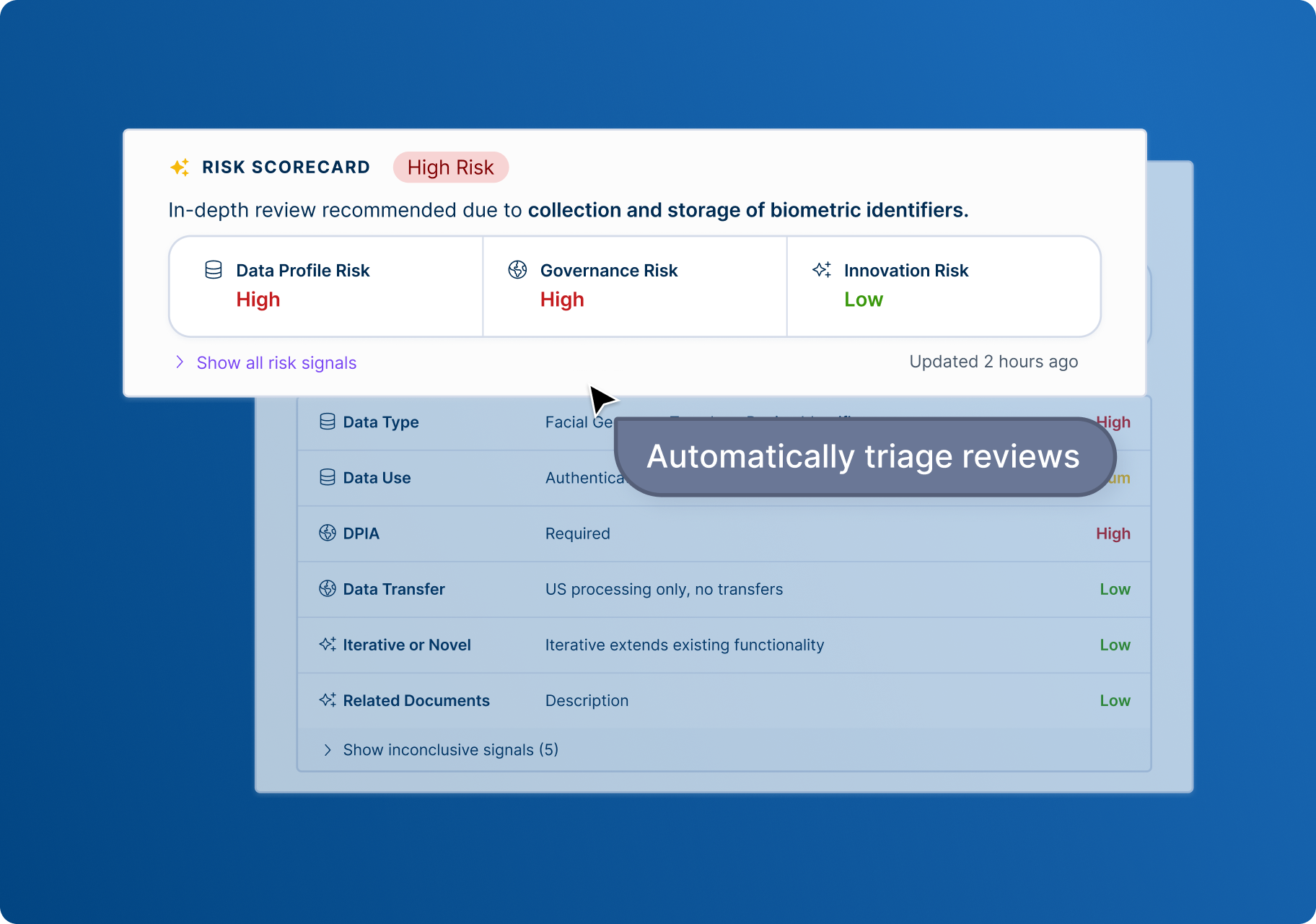
Too many privacy teams get bogged down with compliance documentation and don’t leave enough space to consider higher value privacy challenges. Records of processing, data maps, system descriptions, and inventories need to stay current, but keeping them current is a largely mechanical task that is a prime candidate for automation. The hours reclaimed by automating away this rote work means more time can be spent in the conversations that require expertise: Aligning with product and engineering teams on the right risk posture, and scrutinizing the privacy decisions most likely to affect customers. This high-value advice is almost universally appreciated and leads to greater program adoption over time.
When evaluating where your privacy team spends its time, consider two categories of work:
- Clerical, repeatable tasks that are best handled by automation, such as records of processing, data maps, and inventories.
- High-value, judgment-driven work that is best handled by the privacy team itself, such as aligning on risk posture and reviewing high-impact features.
Become a proactive partner
Everything above points toward one outcome: A privacy function the business treats as a proactive partner rather than a gatekeeper. Gatekeepers are reactive and can only slow progress when issues are identified; partners have the ability to offer proactive solutions that add value to the business. When teams bring you in early because they want your input before launch, you slow nothing down and can help shape the product while changes can be made cheaply. Gatekeeping may achieve some early wins, but only a program built around how teams actually work can compound value for years.
Frequently asked questions
Why do privacy programs fail?
Privacy programs most often fail due to lack of adoption rather than substantive deficiencies. When a program is designed in isolation and imposed on teams through unfamiliar tools and processes, people treat it as overhead and work around it. The policy can be sound, but if the people building products do not use it, the program does not function.
How do you get product teams to adopt a privacy program?
Embed the program in the tools teams already use, such as Jira, Slack, GitHub, and Google Docs, and provide guidance inside those workflows. Communicate in plain language rather than legal citations, start from the business goal behind each request, and give PMs and engineers enough understanding of your risk reasoning to handle routine decisions themselves.
What is a proactive privacy program?
A proactive privacy program is one that teams bring in early because they value the guidance, rather than treating review as a final gate. It operates as a partner to product and engineering, surfacing risk while decisions are still cheap to change, instead of functioning as back-office documentation.
What privacy work should be automated?
Automate the clerical, repeatable documentation: records of processing, data maps, system descriptions, and inventories. This work needs to stay current but does not require expert judgment, so automating it frees the privacy team to focus on high-risk review and on aligning the business around its risk posture.
How can a lean privacy team scale?
A lean privacy team scales by transferring judgment, not just rules. When PMs, engineers, and other stakeholders understand how the privacy function evaluates risk, they can bring informed opinions, escalate the genuinely high-risk cases, and resolve routine questions on their own, which lets a small team cover a far larger organization.
Learn more
See how TerraTrue helps privacy, security, and AI governance teams move risk review earlier and operate as a proactive partner to the business. Book a demo to see it in action.